Learner's Journey Log: Form To Formation
- Sehaj Singh

- Oct 12, 2020
- 2 min read
Updated: Nov 30, 2020
Illustrated Glossary
1. Dots - It is the 1D structure or we can say circle with zero radii.
2. Lines - It is also a 1D structure made with dots of which endpoints never meet with each other and it has the only length.

3. Shape - It is a 2D structure made with line and the endpoints do meet. They are closed structures as polygons which has length and breadth.

4. Forms - It is the 3D structure made with shapes. They consist of the length, breadth and height.

5. Extrusion - Representing and making something with its basic form.

6. Subtraction - Taking out a form from any another form from its edges, corners and faces and to create a new type of form.
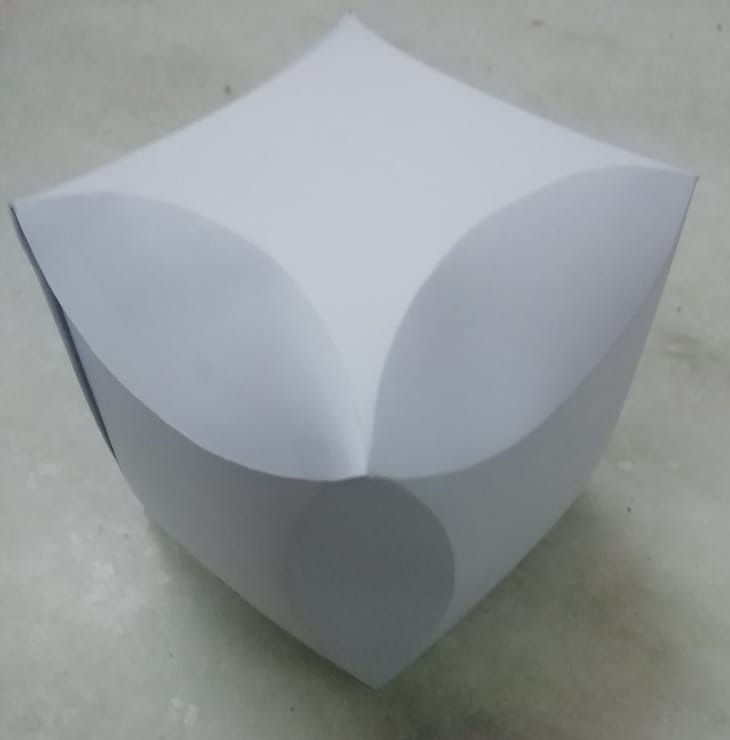
7. Addition - Joining or put together a form to another form on its edges, corners and faces to create a new form.

8. Platonic Solids - These forms are created by the extrusion of same basic shape by joining them on the congruent edges and fold their remaining ends of the edges before completing 360 degrees (flat). There are 5 basic platonic solids.

9. Archimedean Solids - These forms are created by the extrusion of different basic shape by joining them on the congruent edges and fold their remaining ends of the edges before completing 360 degrees (flat). There are 13 basic platonic solids.

10. Ether - It represents the sky and the beyond those clouds which god has created very beautifully.

Forms In Our Surroundings


At The End
Characteristics and Properties of POP
The POP is a white powdered material which when mixed with water (1/3 of its mass) makes gypsum, hard porous material with some heat evolution and takes 15 - 30 mins to settle and few hours to become completely hard. POP always needs a mould to make something which should be one side open to pour the mixture. We can make formations without mould but it would take a lot of hard work and practice and with no perfection. While making POP we should always put POP first in the bowl and then add a little amount of water because it is easier to measure how much POP we need to make, because once water is more we forcefully have to make more POP. When making the mould it should be properly closed from all joints and those joints should be strong so that POP should not burst out from those joints.
Feedback
I get this feedback in between the working of this assignment -
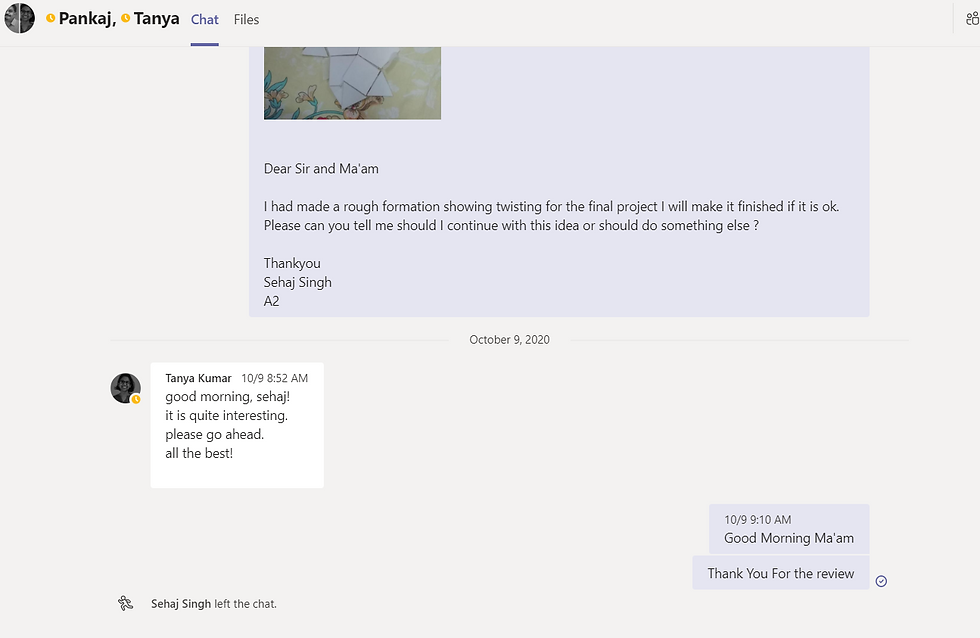

Good job on the "Forms in our surrounding"
But you missed writing about the POP.