Learner's Journey Log: Essence Of Colour
- Sehaj Singh

- Sep 20, 2020
- 6 min read
Updated: Mar 24, 2021
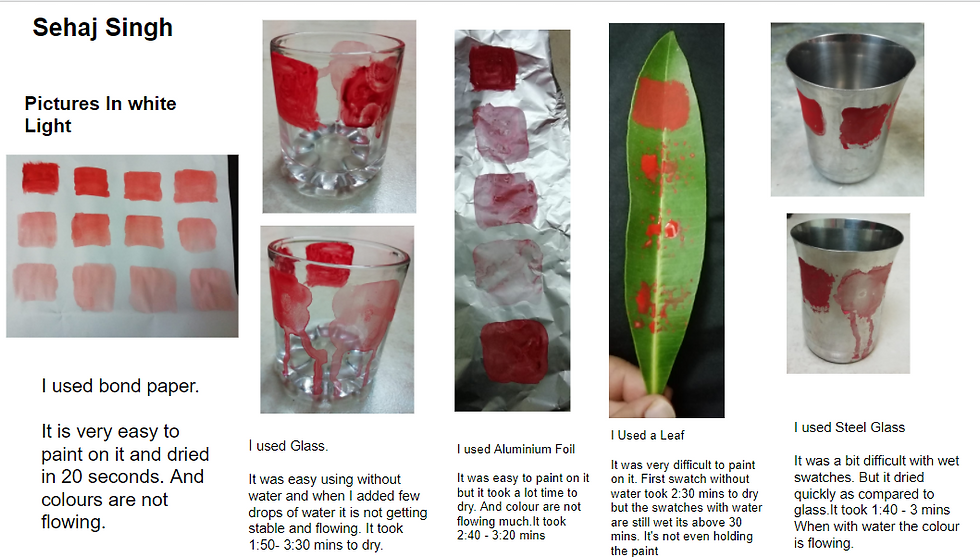
How does the same colour (hue) behave/ appear differently on surfaces of different materials?
Every colour behaves differently on different surfaces. Colour gets applied on each type of surface but some surface requires more amount of colour pigments to settle and visa-versa. Colour takes very less time to dry on paper but when we use the glass or gloss surface they take a lot of time to dry. When we use gloss surfaces we also see a change in tones, shades and tints due to the surface. We can also see the colour getting contrasting effect from the surface acting as the background. For example, I got the colour Red and when I applied it on bond paper it got dried very fast and also gave a good contrast but when I used steel glass it took more colour pigments and time to dry and gave very poor contrast.
What is the role of colours in visual communication? How does colour contribute to effective visual communication?
Colour is something that changes the mood, the feel, the aesthetic and the connection for everything. Like using Light colours make us feel happy and dark colours do the opposite. We use colours to make situations similar to what is happening. The colours we use for our clothes represent us. In females some use light shade nail paints, some use pink or red colour dresses, and a few like darker colours which appear differently. The colour in food also changes with the season. Like using warm colour food in summers and using dark mushroom colours in winters. Colour also plays a significant role in cultures. For example, in some cultures, white represents innocence, but in others, it can represent death. Emotions generated by the symbolism of colours are different in different populations and cultures. Association of colours with a particular meaning, regarding the marketing message, cannot be standardized. Each colour has its symbolism and cannot be used randomly, or applied to any product.
During the project, you have experienced different approaches of inquiry (observation, reading, viewing, discussion, survey, etc.) Comment on your experience of these - how was each approach different? How did each lead to a different type of information/understanding?
(Hint - observation, self-exploration, reading, survey, etc.) Discuss the pros and cons, your comfort and your struggles. Use concrete examples, with images of the work.
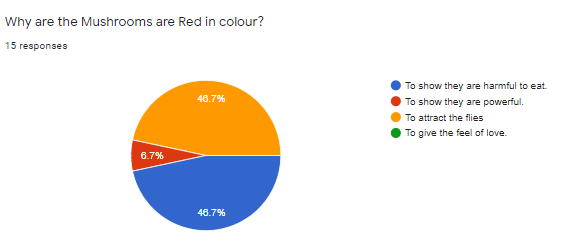
From 1st Day, I observed that the colours can be given darker tones by adding black or dark blue or green hues and to give a lighter shade we can use white or other light hues. I also got to know that glass/gloss mediums are the toughest and paper is the best and under the daylight. On the 2nd day when teachers told us to associate the colours with feelings/emotions, I was unable to do it and was lack of words. I was just thinking of basic emotions like my colour was red and I was thinking of love, danger, etc. Then on the 3rd day when we were told to make the mind map and to search the reasons behind the feelings, I got to know terms and now I can relate the colours with the feelings. For eg - In my logbook, I wrote mushroom gives the vibe of dangerous to eat and in my survey also 50% of people chose this option but the scientific reason is to attract flies. I also learned the colour schemes to be used in the branding logos and sites and the basic terms related to colours. This helped me in describing the change in colours more easily. Then when o the 4th day when we saw the video on how colours used in movies I was easily able to understand it due to the designing terms I learned. But this information has now made me perceive colours everywhere, even if I am watching a movie I am just thinking about the colours.




What were your struggles while doing the final responsive writing task? What helped you overcome these struggles?
During my final responsive writing, I took a lot of time to just think about how will I write to make teachers understand what I experienced. After submission, I also realised that there were a few spelling mistakes in my writing. My friend Simar told me that don't worry just write, you will automatically start thinking and it really helped me and was able to complete my work on time. While doing it I also struggled with the many technical problems with the MS word due to the older version and when adjusting the pictures took my time a lot. I myself figured out my problems and did the project before time. I also struggled with writing the introduction part in which we need to discuss visual skills I was first writing what and how I did in the project and wrote very few of what I learned. My friend told me that we need to write what I learned so I immediately changed that part and also kept the same in other paras, where required.
How was the experience of working in group work? How did it help/hinder your learning?
It was a very great experience to work in a group. It allowed me to make new friends and able to interact with them easily. The group work results in more ideas. Like, during the mind-map making with the friends I also got to know new objects and ideas and also it becomes very easy to relate them with emotions. While working in a group also results in fast work instead of working solo. During the explanation of the home tasks when groups divided speaking parts with each one we could easily explain the assigned topic with more information in one go and the overall information is more quickly complete. Sometimes we couldn't say what we are thinking and at that time our teammates are like our mentors and it is a very good way of learning.
Glossary
1. Colour – Objects reflect light in different combinations of wavelengths. Our brains pick up on those wavelength combinations and translate them into the phenomenon we call colour. It consists of all hues, tints, tones and shades.
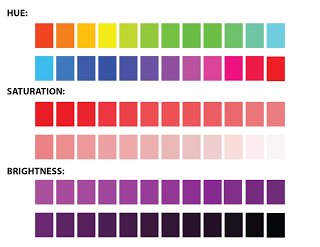
2. Hue – It is a pure colour.
3. Tint – It is a hue to which white has been added.
4. Tone – It is a hue to which black has been added.
5. Shade – It is a hue to which grey (Both black and white) has been added.
6. Temperature – It is referred to as the warmth and coolness of the light.
7. Contrast – It is the difference between two colours.
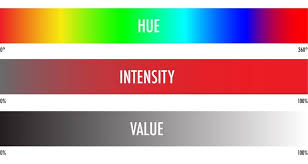
8. Intensity – It refers to the degree of purity of the colour.
9. Saturation – It is the intensity of a hue from grey tone to pure, vivid colour.
10. Brightness – It is the relative lightness and darkness of a particular colour.
11. Value – It is the property that tells how light or dark a colour is.
12. Chromaticity – It shows the purity of a hue. It is measured by the presence of white, grey, or black in a colour.
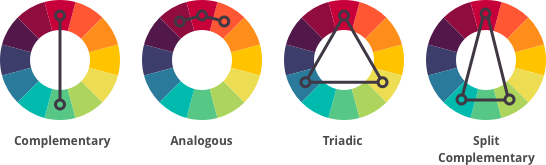
13. Complementary Colours – 2 colours which are opposite on the colour wheel. This scheme provides a very sharp contrast.
14. Analogous Colours – 3 colours that sit next to each other in the colour wheel. In this scheme, one colour dominates, one will support and others will accent.
15. Triadic Colours – 3 colours that are evenly spaced in a colour wheel in a form of a triangle. This scheme creates visual contrast and harmony and tends to be very bright and dynamic.








Your thoughts on this new way of learning, i.e active learning - learning by doing, sharing, discussing and not through books. How is it different from previous experience? What are its advantages and challenges, personally?
By this new type of learning, we could now understand practically by doing ourselves. When reading through books we cannot imagine the colours in our mind how they are changing and so on. This also helped in interacting with our friends and helped us to come forward and also removes laziness. With the help of the discussions, we get more knowledge and we could understand more about the particular thing with every type of understandings from our peers. The problem I faced is that I am very introvert and it took me a lot of time to completely adjust to this learning but now I am started to adjust to it. Practical learning is always the best learning and this becomes a memory in our mind.
What are the key learnings from the project? How will you apply the learnings from this project to your future projects? OR, How relevant were the activities/learnings of the project to your design learning?
Through this project, I learned the basic knowledge of colours and the terms related to them and which are very important to remember. These things will definitely help me in future to make the colour choices and schemes for a particular brand or building. Each colour has its symbolism and meaning and each colour gives many feelings. Colour is the main thing which really affects our mind like when we a black and white movie it looks very dull but as soon as we add colours we can easily understand the emotion of the particular scene. I also got to know how colours show feelings with cultures and festivals and why those colours only and it also shows the personality of a person. I got to learn many scientific terms and theories related to colours and now my whole perspective has changed to perceive colours from other individuals.

Comments