Culture And Community
- Sehaj Singh

- Oct 26, 2020
- 8 min read
Updated: Nov 30, 2020
Pre Task
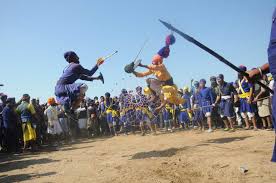
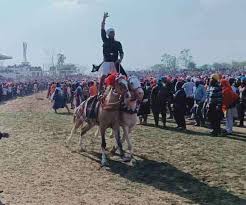
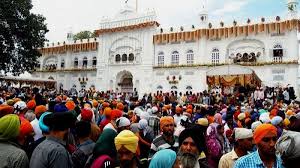
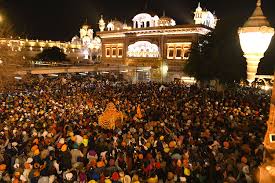
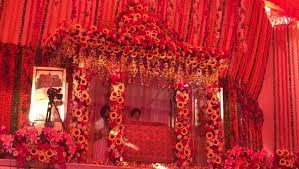
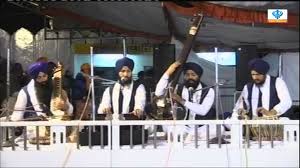
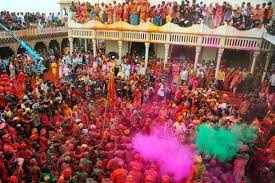
The festival I chose is 'Hola Mohalla' and it's celebrated on the second day of the lunar month of Chett which usually falls in March, a day after the Hindu spring festival Holi but sometimes coincides with Holi, established by Guru Gobind Singh Ji. The significance of it This festival was started to demonstrate Martial Skills in simulated battles. It is a 3 days festival followed by Kirtans, music, poetry competitions, Gatkas, Gurupurabs, Langars, Holi and with lot of Sewa. It is widely celebrated in Anandpur Sahib, Punjab and regions were Sikhs live.







Day 1

Miro Link -
Reflection Writing - 1
Material Components of the culture consist of cultural props, symbols, clothes, food and other objects that we use to perform that particular culture. The objects related to nature cannot be considered as the material, the way we use them further is considered as material components. For example, in Hola Mohalla, there is a tradition to perform Gatka (martial arts in Sikhs) in which fighters use weapons like swords and blue coloured clothes, these will be called as material components.
Non-material Components of the culture consist of feelings, orthodox beliefs, values, ethics, teachings, etc. which are generated while using the material components of the culture. These components are passed on from the elders to their children and still going on. This is the main component which helped in further forwarding your own culture. For example, The use of swords and other weapons in the Gatka gives the feel of power as it shows the martial skills of the Sikhs, this feeling and teachings of our Gods are known as the non-material components of the culture.
Both material and non-material components are interrelated in such a way that while performing culture we eat some particular food and wear particular clothes, we do this because we have some teachings or believes to do it. In this way, both cannot be done without each other. For example, in Sikhs culture, we say Satsriakal to another person when we meet, and the teaching is to give respect and it means 'Almighty is the Ultimate Truth' to the other person, where the word is a material component and the teaching is the non-material.
New Vocabulary
Culture - It is the way to represent person identity with different beliefs, rules and norms
Symbols - It is a sign which helps in giving some teaching in the abstracted form.
Values - These are the teachings which are important for a particular culture.
Norms - These are rules that should be performed in a particular culture.
Gestures - These are signs shown by moving human organs in some manner to perform some act or a way of communication.
Language - It is the main way of communication used b every culture and it is unique to every culture or religion and it is the main way old people teaches their next generations easily.
Ethics - It helps in deciding what is right or wrong.
Visual Organisers - The process of arranging our research in a tabular manner so it looks neat and clean to read.
Material Components - All the physical components used to perform a ritual or belief is called a material component.
Non-Material Components - All the believes and the reasons why something is done, which we think or feel in mind are called the non-material components
Day 2


The object I selected is the Wrist Watch. I chose wristwatch because I liked to wear it and when I was in school, I used to wear it every day. My dad gifted me my dream watch on my birthday. But nowadays lockdown is going on so I am not wearing it a lot but still I had a very great bonding with my watch.
Reflection Writing - 2
According to me, a wristwatch is like a friend which tells us the time and many other features. In my family, my grandfather wears the watch the whole day and their choice is way too different from mine. My grandfather wore the watch with needles and had a metal chain and of golden or silver colour and he wears it every day whereas I wore the watch i.e., analogue-digital with the plastic band with many other features like stopwatch, etc and I like shades of blue, black, green in a watch. and wore it at parties, school/college, or while travelling. For example, there is a gesture/symbol mostly everyone uses to ask the time by placing our forefinger of the right hand on the wrist of our left hand in absence of watch and this festival, there is a lot of noise of crowd so mostly we use this gesture to ask the time anyone. In every culture, the time has given the most value/priority and wearing the watch also represents we are tied with this time span which is the non-material in it. Both the components and dependency are directly related to each other that means if we increase the components, their dependency on each other also increases.
Day 3


Miro Link -
https://miro.com/app/board/o9J_khVAFNw=/
Day 4


Miro Link -
https://miro.com/app/board/o9J_khVAFNw=/
Reflection Writing - 3
In every community, we investigate that those people always perform some sort of culture in their daily life which inherited by their elder and need to follow it no matter what. They actually do it to keep their cultures and traditions alive by forwarding their norms, believes, ethics, symbols, gestures, etc. to their next generations. From our birth, they will start performing some rituals and our mothers teach the language of her culture then she shortly and timely teaches us their norms and believes and generates some sorts of fear if we don't do it. This becomes our habit that we can't refuse to follow. As we grew up we get to follow more norms and gestures, etiquette, symbols from our teachers in schools. This is the pattern, how we learn that culture. The difference in cultures is also due to different geographical factors because in earlier ages there were no modes of transport and people couldn't leave where they live and considered their area as the end of the world and without any research, they believe what they do is the correct cultures and are unique to them only. They were mostly dependent on nature and adapted themselves according to it and also thanks it to give than everything. And by the evolutions, we got see many rulers come into the being and made cultures for their own secs and then it keeps on making new and changed cultures. These sects made by Kings/Gods/ Gurus/Heads are those communities only and their culture and given by their rulers/Gods. Everything that happens in a culture is a way to communicate all the non-material components (like, believes, feelings, myths, rituals, etc.). To reach a destination, there are many ways but at last, each way converges to the same destination, similarly, in cultures every community has its own unique ways to symbolize a particular thing.
Relationship between context and the concept of beauty
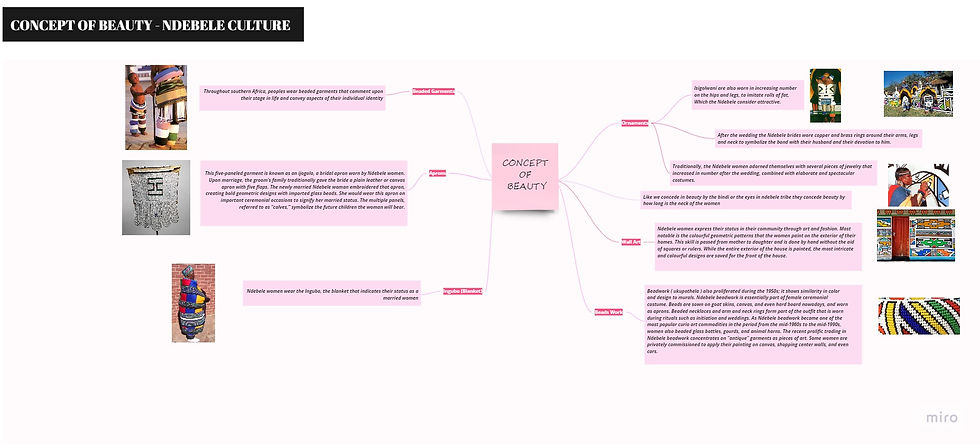
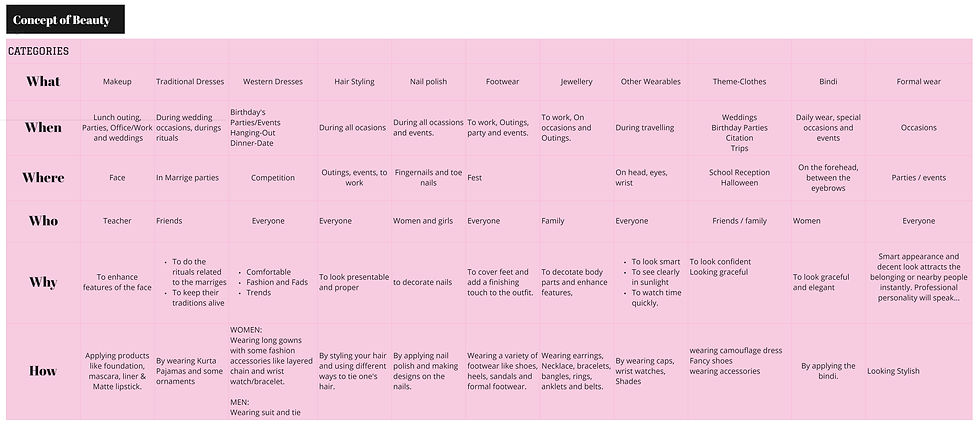
According to the definition, context refers to the intended function for which it is created or if the function has changed or refers for whom it is or time and space for which it is used. Whereas the concept of beauty refers to the pleasure of the senses which person gets by seeing another person. This concept of beauty consists of all types of fashion, arts and ornamentations we see in a community. There is a very close relationship of both the context and beauty because context is the one which will tell us who's gonna show all these beauties means if the context is not there then there will be no one showing this beauty. For example, in the Ndebele community, we can see the women wearing rings around their necks and various ornaments with beads work and their clothes are also according to their age. The concept of beauty is formed on the context - women and ornaments and both the women and ornaments together show their concept of beauty. If there is no context then from where the beauty will come. So there is a direct relationship between context and concept of beauty.
Day 5
Miro Link -
https://miro.com/app/board/o9J_khVAFNw=/
Reflection Writing - 4
There is a direct relationship between context and the concept of beauty because context is like the material component of the non-material component, beauty and together they create the concept of beauty for that community. The context is the main thing of every community because if there is no context then there is no meaning for the concept of beauty. The context refers to the whom is being made for and the beauty is nothing without the person and if both are not there then how will the context survive. My community is Indian and the indigenous community is Ndebele. The similarities in both the communities are that women are the context for the concept of beauty in both the communities and women there wore more ornaments after marriage and the same happens in my community. There are not many similarities in both the communities but differences are many. The differences in both the communities are like in Ndebele community the women there wear a lot of rings around their necks to make their neck slim and long because then only they are considered beautiful but in our community, women wear bangles in their wrists. The other difference is that in Ndebele community women paint their walls with geometric patterns with different colours to show their love towards their husbands and also to communicate within their people but in my community, we paint our houses with normal paints. There is no limit to the differences due to the geographical differences and their community is related to older generation whereas in our community we have changed with the invade of the western culture by Britishers.
Day 6


Final Reflection
I live in a community that is affected by the invading of western culture by the Britisherand they made our changes in many of our rituals give rise to many new communities with different languages, symbols, believes, etc. Every day I perform rituals like bowing down to all the family members, after bath drinking green tea, wearing a turban, having veg food, attending my online classes, then going to the gym, etc. The 3 communities to whom I found I belong to are Namdhari, IIAD, Gym community. The main ritual I always follow to wear a white turban because we always need to cover our head and white symbolizes peace and purity which belongs to the Namdhari community. The other ritual of the Gym I follow is to have a proper diet like drinking green tea after bathing and this ritual is to improve the metabolism and this makes us slim and this belongs to the gym community. And the last ritual I follow is to attend the online classes Monday to Friday 9:00 - 16:00 that is to become a great designer in my life and this ritual belongs to the IIAD community. I agree to the ritual I follow in my everyday life to wear a white turban it is the teaching of our god Satguru Ram Singh Ji and he explained that to spread purity and peace like not killing cows for meat and stop female foeticides. I disagree with the ritual to become slim and always follow the diet because due to the western culture none likes fat people and I believe that if we stop eating for those days and the get to the specific weight we have to then maintain it and can never eat whatever we like. We must follow the diet and exercises only that much that our fat gets digested and be safe from various diseases. While performing all the ritual are other activities every time gets affected and occurs many disputes and irregularities and we often get scolded from elders. The conflicting believe I saw in both the communities is that having diet results in the weakness in the body and later on cannot give more attention and interest in other activities and feel weakness while attending my online classes and if I say I am tired to the teachers, they will definitely scold me. We always see conflicts while attending marriages and not attending the classes. All the communities started in my culture are started by our gods that took birth in human life and spread the good values and to perform them they told us these non-material elements of the life and some are followed but may get changed with our rulers.





Flyer Design


Feedback
I got the feedback and rubrics as follows -


Comments